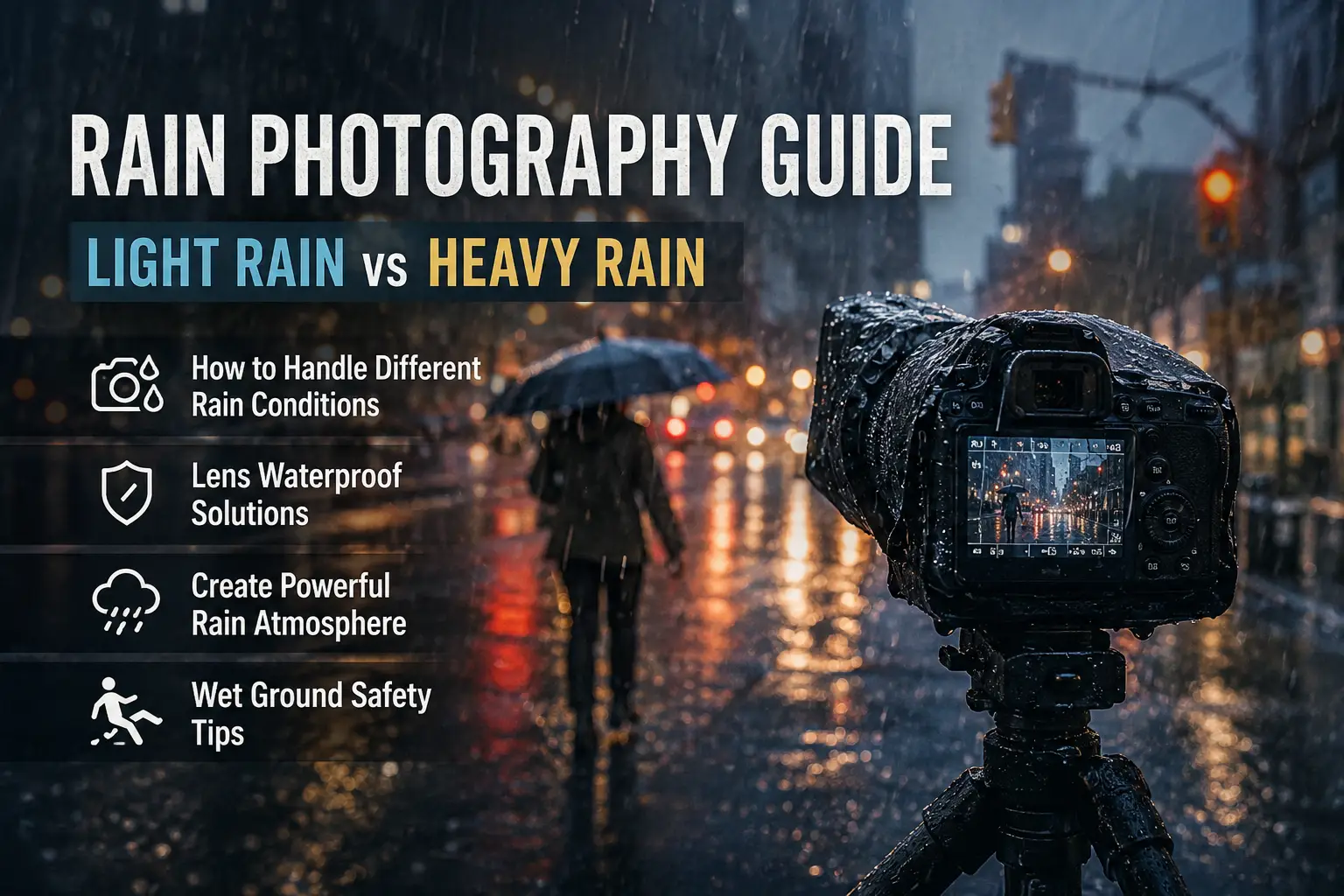
Who Needs a Rain Photography Strategy?
Rain changes how you move, shoot, protect gear, and manage visibility. Many photographers struggle during travel, city walks, hiking routes, or outdoor events when weather conditions suddenly shift.
Light rain and heavy rain require different operational approaches:
- Light rain: better for atmosphere, reflections, and street mood
- Heavy rain: requires strict equipment protection and controlled movement
- Wet environments: increase slipping risk and reduce shooting stability

Why Rain Creates Shooting Challenges
Light Rain Issues
- Water droplets on lens surface
- Reduced contrast in cloudy lighting
- Autofocus instability in misty conditions
Heavy Rain Issues
- Rapid equipment moisture exposure
- Reduced visibility for composition
- Difficulty changing lenses outdoors
- Limited mobility during shooting sessions
Key insight: Rain is not only a visual condition but also a workflow constraint.
Risks of Ignoring Rain Shooting Preparation
Equipment Damage
- Lens coating deterioration
- Electronic button malfunction
- Battery compartment moisture exposure
Reduced Shooting Efficiency
- Frequent lens cleaning interrupts workflow
- Slower framing during movement
- Unstable handheld shooting in wet conditions
Outdoor Safety Risks
- Slippery sidewalks and stairs
- Reduced traction on wet surfaces
- Visibility issues near roads and trails
Practical Solutions for Rain Photography
1. Adjust Shooting Strategy by Rain Intensity
Light Rain:
- Use reflections on streets and pavements
- Shoot near light sources for rain visibility
- Capture umbrellas and motion elements
Heavy Rain:
- Shoot under shelters or covered areas
- Avoid frequent lens changes
- Keep movement routes simple and short
2. Use Basic Lens Waterproof Protection
- Camera rain cover for body protection
- Lens hood to reduce direct water impact
- Dry microfiber cloths in sealed storage
- Zip bags for emergency weather protection
3. Enhance Rain Atmosphere in Photos
- Use backlighting to highlight rain streaks
- Capture reflections on wet surfaces
- Include moving subjects like people or vehicles
4. Improve Mobility in Wet Conditions
- Use anti-slip footwear for outdoor shooting
- Switch to crossbody camera straps
- Avoid running between shooting locations
5. Prioritize Wet Ground Safety
- Test surface stability before low-angle shots
- Avoid moss-covered or metal slippery surfaces
- Check stairs and slopes before movement
Conclusion
Rain photography requires adaptive workflow, not complex gear setups.
Light rain enhances visual storytelling through atmosphere, while heavy rain demands safety and equipment protection.
By combining waterproof handling, controlled mobility, and reflection-based composition, outdoor shooting remains stable during travel, walking, and urban photography scenarios.