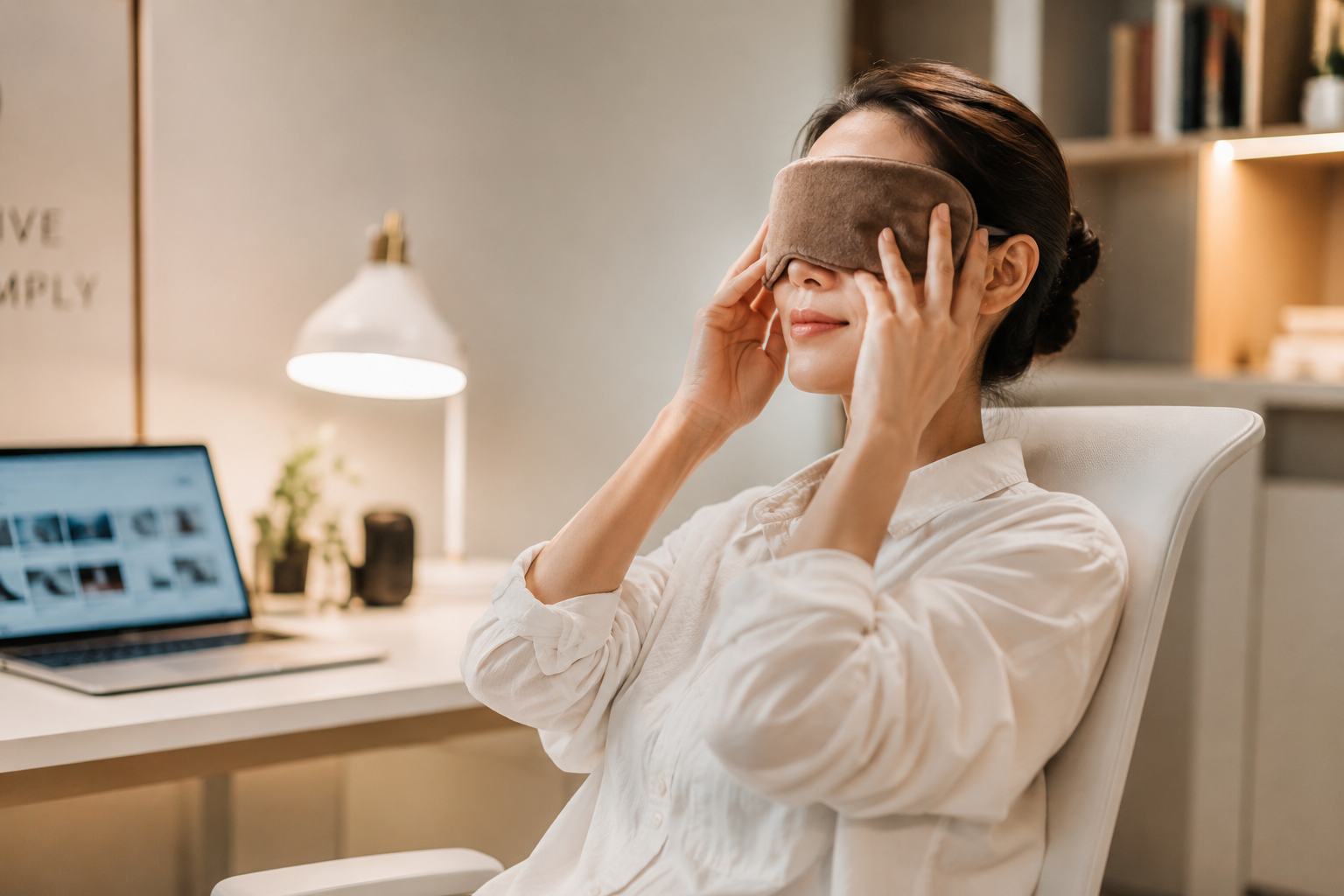
Fatigue: – Featured Image: Eye fatigue relief – person resting eyes with warm compress at desk
Struggling with tired, strained eyes after long screen sessions? You’re not alone. In the Work Scenes category, eye fatigue is one of the most common complaints among knowledge workers. This guide provides evidence-based strategies to prevent and relieve eye fatigue effectively.
What Is Eye Fatigue and Why Does It Happen?
Eye fatigue (also called asthenopia) occurs when your eyes get tired from intense use-such as staring at digital screens, driving long distances, or reading for extended periods. According to the American Optometric Association, 50-90% of computer users experience symptoms of digital eye strain.
Common symptoms include:
- Sore, tired, burning, or itching eyes
- Watery or dry eyes
- Blurred or double vision
- Increased sensitivity to light
- Difficulty keeping eyes open
- Headaches, especially around the forehead and temples
The Science Behind Digital Eye Strain
When you focus on a screen, your eyes perform three demanding tasks simultaneously:
- Focusing – Your eye muscles constantly adjust to maintain sharp focus on pixels that are inherently less defined than printed text
- Blinking – Studies show we blink 66% less when looking at screens, leading to dry eyes
- Convergence – Your eyes turn inward to focus on near objects, causing muscle fatigue over time
A study published in the Journal of the American Optometric Association found that the average person blinks only 7 times per minute while using a computer, compared to the normal 15-20 blinks per minute.
Evidence-Based Strategies to Prevent Eye Fatigue
1. Follow the 20-20-20 Rule
Every 20 minutes, look at something 20 feet away for at least 20 seconds. This simple technique, recommended by the American Academy of Ophthalmology, gives your focusing muscles a chance to relax. Research shows it reduces eye strain symptoms by up to 60%.
2. Optimize Your Screen Settings
- Brightness – Match your screen brightness to the surrounding environment. A screen that’s significantly brighter or darker than your room causes extra strain.
- Text size – Increase font size so you don’t need to lean forward to read.
- Blue light filter – Enable night mode or use blue light filtering glasses, especially in the evening.
- Refresh rate – Higher refresh rates (120Hz+) reduce flicker that contributes to eye fatigue.
3. Adjust Your Workspace Lighting
Harsh overhead lighting and screen glare are major contributors to eye fatigue. Position your monitor so that windows are to the side, not in front or behind. Use a desk lamp with warm light for task lighting instead of relying solely on overhead fixtures.
4. Practice Conscious Blinking
Since we blink less when staring at screens, make a conscious effort to blink fully and regularly. Some experts recommend the “blink exercise”: close your eyes gently for 2 seconds, squeeze them shut for 2 seconds, then open. Repeat 5 times every hour.
5. Use Artificial Tears
Over-the-counter lubricating eye drops can help if your eyes feel dry. Look for preservative-free formulas if you need to use them more than 4 times per day. Avoid “redness relief” drops as they can cause rebound redness.
6. Position Your Monitor Correctly
Ergonomic guidelines recommend:
- Monitor at arm’s length (20-28 inches from your eyes)
- Top of screen at or slightly below eye level
- Slight backward tilt of 10-20 degrees
When to See an Eye Doctor
While most eye fatigue can be managed with the strategies above, see an optometrist if you experience:
- Persistent eye pain or severe headaches
- Sudden changes in vision
- Eye fatigue that doesn’t improve after rest
- Difficulty focusing that affects daily activities
A comprehensive eye exam can rule out underlying conditions like uncorrected refractive errors, dry eye syndrome, or binocular vision problems.
Explore More Categories
Interested in other guides? Check out our content:
Frequently Asked Questions
How long does it take for eye fatigue to go away?
Most cases of eye fatigue improve within a few hours of rest. If you’ve been staring at screens all day, give your eyes a break for at least 1-2 hours. Chronic eye fatigue that persists for days may require an eye exam.
Do blue light glasses really work?
Research is mixed. Some studies show blue light filters reduce eye strain and improve sleep quality, while others find minimal effect. However, many users report subjective improvement. They’re most beneficial if you use screens in the evening, as blue light can disrupt melatonin production.
Can eye fatigue cause permanent damage?
No. Eye fatigue itself doesn’t cause permanent damage to your eyes. However, chronic uncorrected vision problems that cause fatigue (like uncorrected astigmatism) should be addressed to prevent ongoing discomfort.
Is eye fatigue the same as dry eye?
They’re related but different. Eye fatigue is a general term for tired eyes from overuse. Dry eye is a specific condition where your eyes don’t produce enough tears or the tears evaporate too quickly. Dry eye can cause or worsen eye fatigue.
Final Thoughts
Eye fatigue is a common but manageable condition. The key is prevention: follow the 20-20-20 rule, optimize your workspace, and take regular breaks. Small changes in your daily habits can make a significant difference in your eye comfort and overall productivity.
Remember: if symptoms persist despite these measures, don’t hesitate to consult an eye care professional. Regular eye exams are important for maintaining long-term eye health.
Want More Work Scenes Guides?
Explore our full Work Scenes collection for more evidence-based guides.