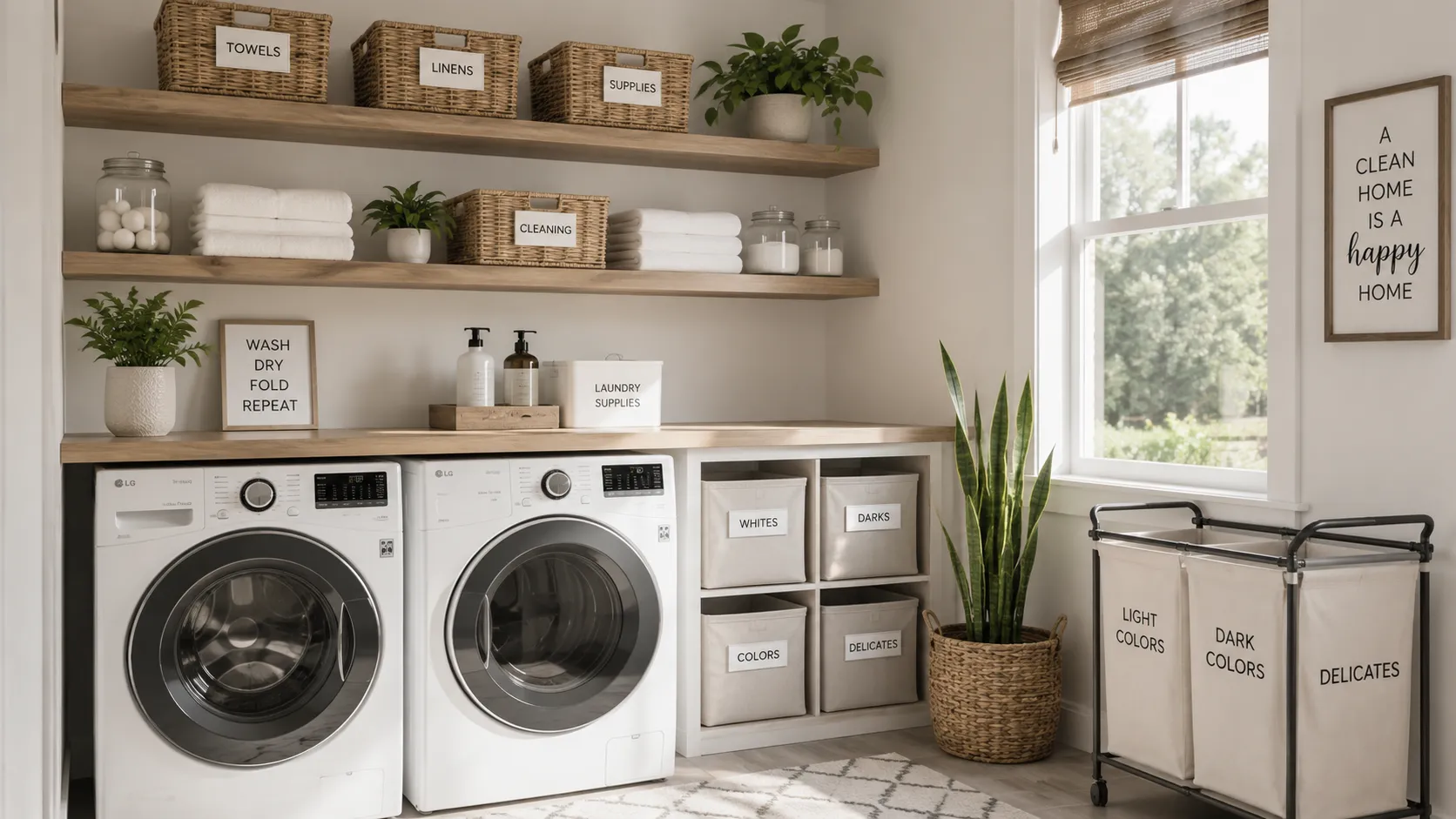
How to organize laundry room is an important topic that many people search for. In this comprehensive guide, we will explore everything you need to know about how to organize laundry room, backed by expert insights and practical strategies.
Why Organizing Your Laundry Room Matters
A disorganized laundry room wastes time, causes frustration, and can even damage your clothes. The American Psychological Association notes that cluttered environments increase stress levels and reduce cognitive performance. When your laundry supplies are scattered and your sorting system is nonexistent, a simple task becomes unnecessarily complicated.
Benefits of an Organized Laundry Room
- Time savings – Find supplies instantly instead of searching through cluttered cabinets
- Better clothing care – Proper sorting prevents color bleeding and fabric damage
- Reduced stress – A clean, organized space makes chores feel less overwhelming
- Space efficiency – Maximize every square foot, especially in small laundry rooms
These benefits align with broader home organization principles that apply across all rooms in your house.
How to Assess Your Laundry Room Space
Before buying any storage solutions, take an honest look at your current space. Understanding your room’s dimensions, layout, and pain points will help you choose the right organization strategy.
Space Assessment Checklist
- Measure your room – Note the width, depth, and height of your laundry area
- Identify dead zones – Look for unused corners, wall space above appliances, and the area behind doors
- List your supplies – Count all detergents, stain removers, hangers, and other items you need to store
- Note your workflow – Track the path from dirty clothes to clean, folded laundry. Where are the bottlenecks?
- Set a budget – Basic organization can cost $50-200; full remodels range from $500-3,000
Common Laundry Room Layouts
- Galley style – Narrow room with appliances on one or both sides. Focus on vertical storage and over-door solutions.
- L-shaped – Appliances on two adjacent walls. Use the corner for a folding station or tall shelving unit.
- U-shaped – Appliances on three walls. Maximize counter space for folding and add upper cabinets for storage.
- Closet laundry – Stackable washer and dryer in a closet. Use the door and any available wall space for hanging storage.
Essential Storage Solutions for Every Laundry Room
The right storage solutions make the difference between a chaotic laundry room and an efficient one. Research from the National Institutes of Health shows that organized environments reduce cognitive load and improve task efficiency by up to 20%.
Must-Have Storage Items
- Shelving units – Adjustable shelves accommodate items of different heights. Metal wire shelves resist moisture better than wood.
- Clear bins with labels – See-through containers let you identify contents at a glance. Label each bin for quick access.
- Over-the-door organizers – Perfect for small spaces. Store ironing boards, cleaning supplies, and small items.
- Rolling cart – A mobile cart can hold supplies and be moved out of the way when not in use.
- Wall-mounted drying rack – Foldable racks save floor space while providing air-drying capability.
Budget-Friendly Organization Ideas
- Repurpose mason jars – Store small items like clothespins, stain remover sticks, and sewing supplies
- Use tension rods – Install under shelves for hanging spray bottles and cleaning tools
- Command hooks – Hang ironing boards, lint rollers, and laundry bags without drilling
- Shower caddies – Perfect for organizing detergent bottles and fabric softeners on shelves
Create an Efficient Sorting System
A proper sorting system is the backbone of an organized laundry room. Without one, you waste time deciding what goes where every time you do laundry.
The Three-Bin Sorting Method
- Lights bin – Whites, light grays, and pastels
- Darks bin – Blacks, navys, dark grays, and deep colors
- Colors bin – Reds, blues, greens, and other medium-bright colors
Additional Sorting Categories
- Delicates – Lingerie, silk, and fine fabrics that need gentle washing
- Towels and linens – Wash separately from clothing for better hygiene
- Heavy items – Jeans, jackets, and work clothes that need longer wash cycles
- Dry clean only – Keep a designated basket for items that need professional cleaning
Setting Up Your Sorting Station
Place your sorting bins or hampers in a location that is easy to access when bringing in dirty laundry. If space allows, use a multi-compartment hamper with separate sections for lights, darks, and colors. This eliminates the sorting step entirely – family members can deposit clothes directly into the correct compartment. For more home organization strategies, see our guide on organizing digital files, which uses similar categorization principles.
Maximize Vertical Space
Most laundry rooms have more vertical space than horizontal space. Utilizing wall height is the key to maximizing storage in small laundry areas.
Vertical Storage Strategies
- Floor-to-ceiling shelving – Install shelves from the floor to the ceiling. Store frequently used items at eye level and seasonal items on higher shelves.
- Over-appliance storage – Use the space above your washer and dryer for a shelf or cabinet. This is often the most underutilized area in a laundry room.
- Pegboard walls – Install a pegboard for hanging cleaning tools, iron, lint rollers, and other frequently used items.
- Stackable washer and dryer – If you are renovating, consider stacking your appliances to free up floor space for storage or a folding station.
Folding Station Ideas
- Wall-mounted fold-down table – Folds flat against the wall when not in use
- Rolling island cart – Provides counter space and storage, can be moved as needed
- Over-appliance shelf – A sturdy shelf above the washer and dryer doubles as a folding surface
- Ironing board cabinet – A built-in or wall-mounted ironing board saves floor space
Maintenance Tips to Keep It Organized
Organization is not a one-time project – it requires ongoing maintenance. Establishing simple habits will keep your laundry room functional and clutter-free long after the initial setup.
Daily Habits
- Wipe down surfaces – A quick wipe of counters and appliance tops prevents buildup
- Return items to their place – Put detergents and supplies back immediately after use
- Empty lint trap – Clean the dryer lint trap after every use for safety and efficiency
Weekly Habits
- Check supply levels – Note when detergents, fabric softeners, and dryer sheets are running low
- Sort and fold promptly – Do not let clean laundry pile up. Fold and put away within 24 hours.
- Wipe down hampers – Empty and wipe sorting bins to prevent odor buildup
Monthly Habits
- Deep clean appliances – Run a cleaning cycle on your washer and wipe down the dryer drum
- Reorganize as needed – Adjust storage solutions if your needs have changed
- Check for expired products – Dispose of old stain removers and cleaning products that have lost effectiveness
These maintenance habits work well alongside other time management strategies to keep your household running smoothly.
Frequently Asked Questions
How much does it cost to organize a laundry room?
A basic laundry room organization can cost $50-200 using budget-friendly solutions like bins, labels, and over-door organizers. A moderate upgrade with shelving units and a rolling cart ranges from $200-500. A full remodel with custom cabinetry and built-in storage can cost $1,000-3,000. Start with the basics and add upgrades gradually as your budget allows.
What is the best way to organize a small laundry room?
For small laundry rooms, focus on vertical storage and multi-functional furniture. Use over-the-door organizers, wall-mounted shelves, and stackable appliances. A rolling cart provides extra counter space and can be moved when not needed. Clear bins with labels help you see contents without opening them, maximizing the utility of limited shelf space. These principles are similar to those used in garage storage organization.
How often should I deep clean my laundry room?
A thorough deep clean every 3-6 months is recommended. This includes cleaning inside the washer drum, wiping down all shelves and surfaces, organizing supplies, and checking for any maintenance issues with your appliances. Between deep cleans, maintain the space with weekly wipe-downs and daily habits like returning items to their designated spots.
Final Thoughts
Learning how to organize a laundry room transforms one of the most frequently used spaces in your home from a source of frustration into an efficient, pleasant workspace. Start by assessing your space, invest in the right storage solutions, create a sorting system that works for your household, and establish maintenance habits to keep everything in order. Even small improvements – like adding labeled bins or a wall-mounted shelf – can make a significant difference in your daily laundry routine.
Continue exploring practical guides across different life scenarios:
- Home Scenes – Optimize your living environment
- Work Scenes – Boost your professional productivity
- Mindset Scenes – Build better daily habits