How to fix old record player is an important topic that many people search for. In this comprehensive guide, we will explore everything you need to know about how to fix old record player, backed by expert insights and practical strategies.
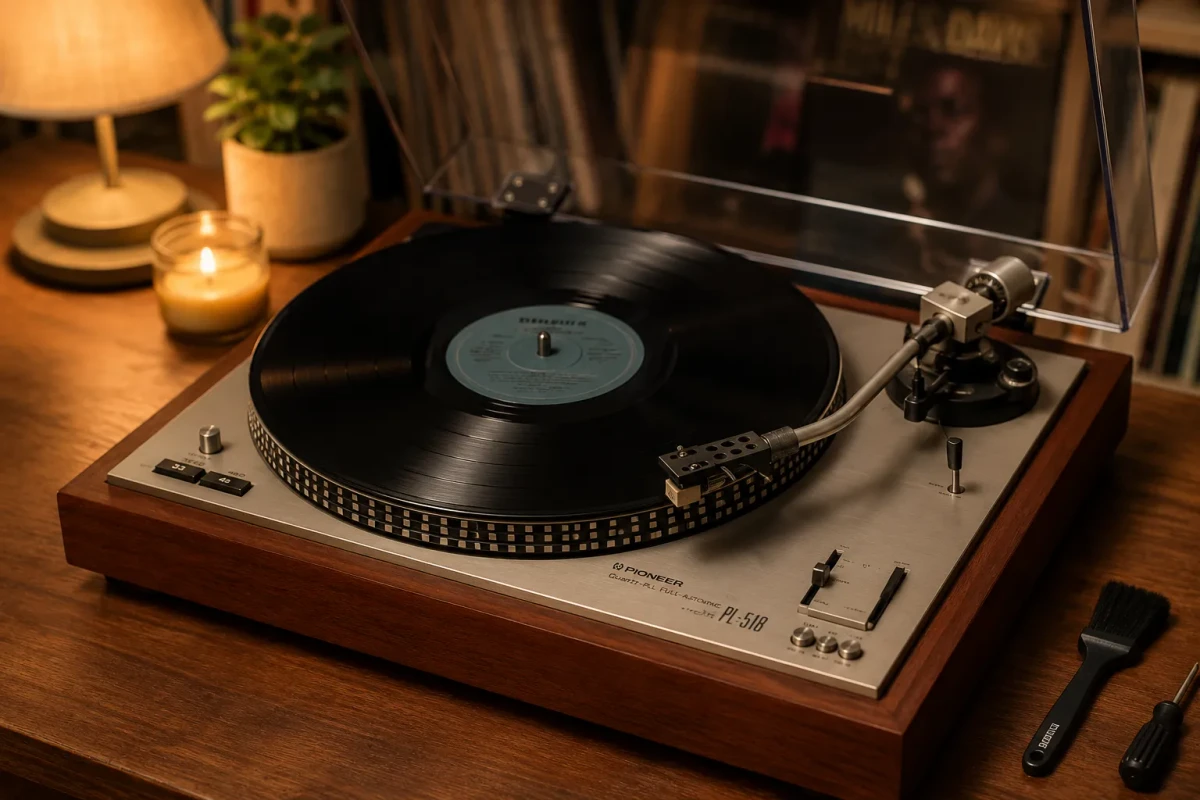
Featured Image: How to fix an old record player – vintage turntable with tools for repair
Table of Contents
Record players are experiencing a major revival, and many people are discovering old turntables in attics and thrift stores. In the Nostalgia Scenes category, restoring a vintage record player connects you to the golden age of analog music. This guide helps you diagnose and fix common issues.
Identify Your Record Player Type
Record players fall into three categories:
- Fully automatic – Loads and plays records automatically, returns tonearm at end. More complex mechanisms that can fail.
- Semi-automatic – Manual load, automatic return at end of record. Moderate complexity.
- Fully manual – You place the needle and lift it at the end. Simplest to repair.
Knowing your type helps you diagnose issues. Manual players have fewer moving parts and are generally more reliable and easier to maintain.
Common Issue: No Sound or Weak Sound
Check these in order:
- Is the player plugged in? Check the power cable and outlet
- Is the volume up? Check both the player and amplifier volume
- Is the correct input selected? on your amplifier (Phono vs. Aux)
- Check the stylus for wear or damage – a worn stylus produces weak, distorted sound
- Check RCA cable connections for corrosion or loose connections
- Check the ground wire – a missing ground connection causes hum
If all connections are good and there is still no sound, the cartridge or internal wiring may need professional attention.
Common Issue: Record Skips or Repeats
Skipping is usually caused by one of these factors:
- Worn or dirty stylus – Clean with a soft brush; replace if worn
- Unlevel turntable – Use a bubble level to ensure the player is perfectly flat
- Excessive vibration – Move away from speakers and foot traffic
- Warped record – Check if the record itself is the problem by trying a different record
- Incorrect tracking force – Too light causes skipping; too heavy damages records
Most skipping issues are resolved by cleaning or replacing the stylus and ensuring the turntable is level.
Common Issue: Wrong Speed (33 vs 45 RPM)
Most record players have a speed selector switch:
- 33 RPM – For LPs (12-inch albums)
- 45 RPM – For singles (7-inch records)
- 78 RPM – For very old shellac records (on some vintage players)
If records sound too fast or slow:
- Check the speed setting first
- Some older players have a belt that can stretch, causing speed issues
- Belt-drive players may need a belt replacement (-15 online)
- Direct-drive players may need speed calibration by a technician
Common Issue: Belt-Drive Players Not Spinning
Belt-drive turntables use a rubber belt to connect the motor to the platter.
Symptoms of a bad belt:
- Motor runs but platter doesn’t spin
- Platter spins slowly or inconsistently
- Squealing or slipping sounds
Replacement process:
- Remove the platter (usually lifts straight off)
- Remove the old belt from the motor pulley
- Install the new belt on the motor pulley first
- Stretch it over the platter rim
- Replace the platter
Replacement belts are inexpensive (-15) and widely available online. Match the belt size to your player model.
When to Seek Professional Help
Some issues require professional servicing:
- Motor problems – Unusual noises, failure to start, inconsistent speed
- Tonearm bearing issues – Stiff movement, uneven tracking
- Electronic component failures – No power, intermittent sound
- Precision speed calibration – Requires specialized equipment
- Cartridge alignment – Critical for sound quality and record preservation
If basic troubleshooting doesn’t resolve the issue, take your player to a qualified technician. Vintage record player repair specialists can be found through audio enthusiast communities and local record stores.
Frequently Asked Questions
How often should I replace the stylus on my record player?
Replace the stylus after 500-1,000 hours of play, or approximately every 1-2 years for regular listeners. Signs of wear include distorted sound, record damage, or visible flattening of the needle tip under magnification.
Can I use a vintage record player without damaging my records?
Yes, if the player is in good working condition. Ensure the tracking force is set correctly, the stylus is not worn, and the turntable is level. A properly maintained vintage player can be gentler on records than many modern budget players.
How much does it cost to restore a vintage record player?
Basic maintenance (belt replacement, stylus replacement, cleaning) costs -50 in parts. Professional CLA (Clean, Lubricate, Adjust) service costs -200. Full restoration with electronic component replacement can cost -400. For rare or valuable players, professional restoration is worth the investment.
Explore More Categories
Discover more guides and tips across our content categories:
Final Thoughts
Restoring a vintage record player is a rewarding project that connects you to the golden age of analog music. Start with basic troubleshooting, handle what you can, and seek professional help for complex issues. The warm sound of vinyl is worth the effort.
Related Articles
Best Mechanical Keyboard For Typing