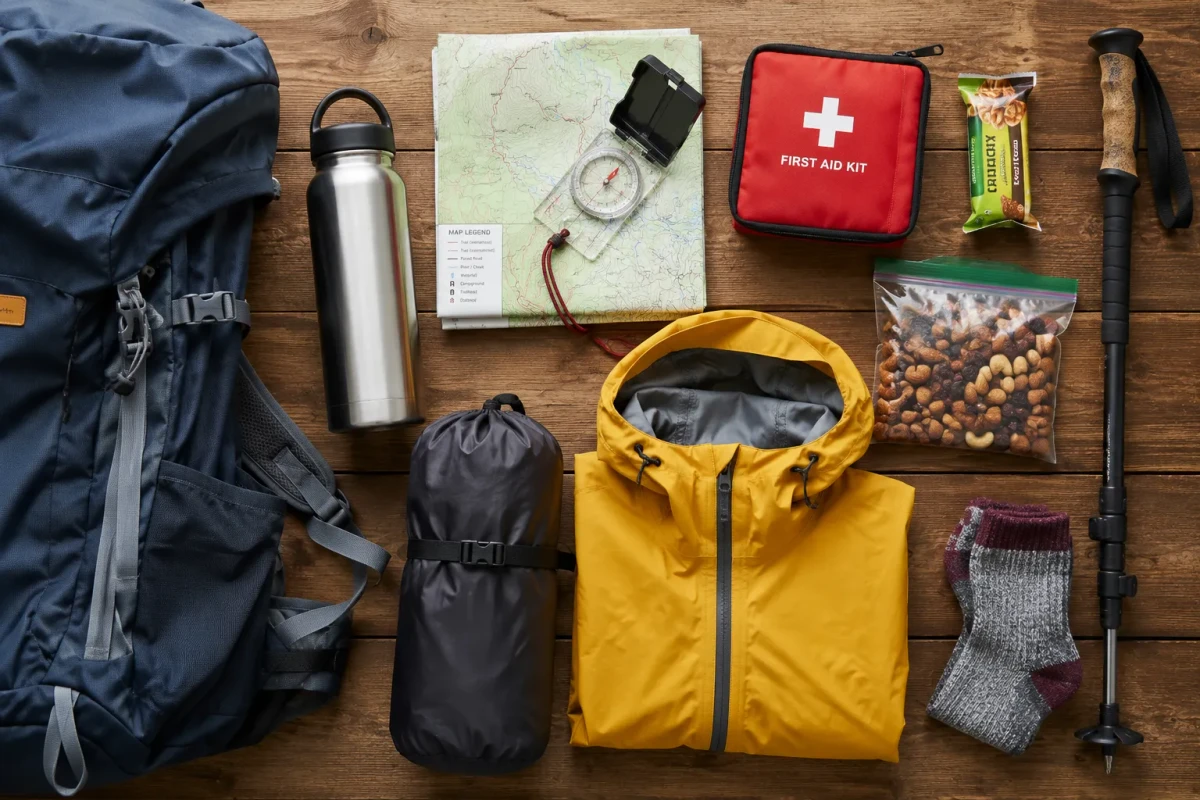
Featured Image: How to pack for a day hike – hiking backpack with essential gear laid out
Table of Contents
This comprehensive guide on how to pack for a day hike provides evidence-based strategies and practical tips you can start using today.
Proper packing can make the difference between an enjoyable hike and a miserable or even dangerous experience. In the Outdoor Scenes category, day hike preparation is fundamental to outdoor safety and enjoyment. This guide provides a complete packing checklist for day hikes.
The Ten Essentials: Never Leave Without These
The classic Ten Essentials list, originally developed by The Mountaineers in the 1930s and updated for modern hiking:
- Navigation – Map, compass, and/or GPS device
- Sun protection – Sunscreen, sunglasses, hat
- Insulation – Extra clothing layers
- Illumination – Headlamp or flashlight with extra batteries
- First-aid supplies – Basic kit plus personal medications
- Fire – Matches, lighter, or fire starter
- Repair kit and tools – Knife, duct tape, gear repair items
- Nutrition – Extra food beyond what you plan to eat
- Hydration – Extra water and/or purification method
- Emergency shelter – Space blanket or bivy sack
These items handle most day-hike emergencies and weigh only 2-3 pounds total.
Choose the Right Backpack
For day hikes, a 20-30 liter backpack is ideal.
Key features to look for:
- Padded shoulder straps – Prevent digging and discomfort
- Hip belt – Distributes weight to your hips, not shoulders
- Multiple compartments – Keep items organized and accessible
- Water bottle pockets – Side pockets for easy hydration access
- Rain cover – Built-in or separate cover for wet weather
The pack should sit comfortably on your hips, not your shoulders. Test it with weight before your hike.
Hydration: How Much Water to Bring
Plan for at least 0.5 liters of water per hour of hiking.
- Hot weather or altitude – Increase to 1 liter per hour
- For a 4-hour hike – Bring 2-3 liters minimum
- Consider a hydration bladder (2-3L) for easy access while walking
- Bring a water filter or purification tablets as backup for longer hikes
Dehydration symptoms to watch for: headache, dizziness, dark urine, fatigue, and confusion. If you experience these, stop, rest, and drink water immediately.
Nutrition: Fuel for the Trail
Pack high-energy, lightweight snacks:
- Trail mix (nuts, dried fruit, chocolate chips)
- Energy bars or granola bars
- Beef jerky or plant-based protein snacks
- Fresh fruit (apples and oranges hold up well)
- Nut butter packets with crackers
Rule of thumb: Pack one snack per hour of hiking plus a substantial lunch for hikes over 4 hours. Your body burns 400-600 calories per hour while hiking – you need to replenish that energy.
Clothing: Layer for Changing Conditions
Use the three-layer system:
- Base layer – Moisture-wicking fabric (merino wool or synthetic). Never cotton.
- Mid layer – Insulating layer (fleece or down jacket)
- Outer layer – Waterproof and windproof shell
Always pack an extra warm layer, even on sunny days. Mountain weather changes rapidly, and temperatures can drop 20?F at higher elevations.
Footwear: Wear broken-in hiking boots or trail shoes with good traction. Bring blister treatment (moleskin or blister bandages).
Pre-Hike Checklist and Planning
Before every hike:
- Check the weather forecast (including hourly updates)
- Inform someone of your route and expected return time
- Charge your phone and bring a backup battery
- Review trail conditions and any closures
- Pack your bag the night before
- Check that all Ten Essentials are in your pack
- Apply sunscreen before you start
Proper planning prevents most hiking problems before they start. The most common hiking emergencies are preventable with good preparation.
Frequently Asked Questions
How much water should I bring for a 5-mile hike?
For a 5-mile hike (approximately 2-3 hours), bring at least 1.5-2 liters of water. In hot weather or at altitude, increase to 3 liters. Always bring more than you think you need.
What should I wear on my first day hike?
Wear moisture-wicking clothes (not cotton), comfortable broken-in hiking shoes or boots, and bring an extra layer. Dress in layers so you can adjust as the temperature changes during the hike.
Do I need hiking boots for a day hike?
For easy, well-maintained trails, trail running shoes are sufficient. For rocky, uneven, or steep terrain, hiking boots provide better ankle support and traction. The most important factor is that your footwear is broken in and comfortable.
Explore More Categories
Discover more guides and tips across our content categories:
Final Thoughts
Proper packing is the foundation of a safe and enjoyable hike. Start with the Ten Essentials, choose the right backpack, and always tell someone your plans. With good preparation, every hike becomes an adventure rather than a worry.
Related Articles
Home Office Lighting Setup Guide