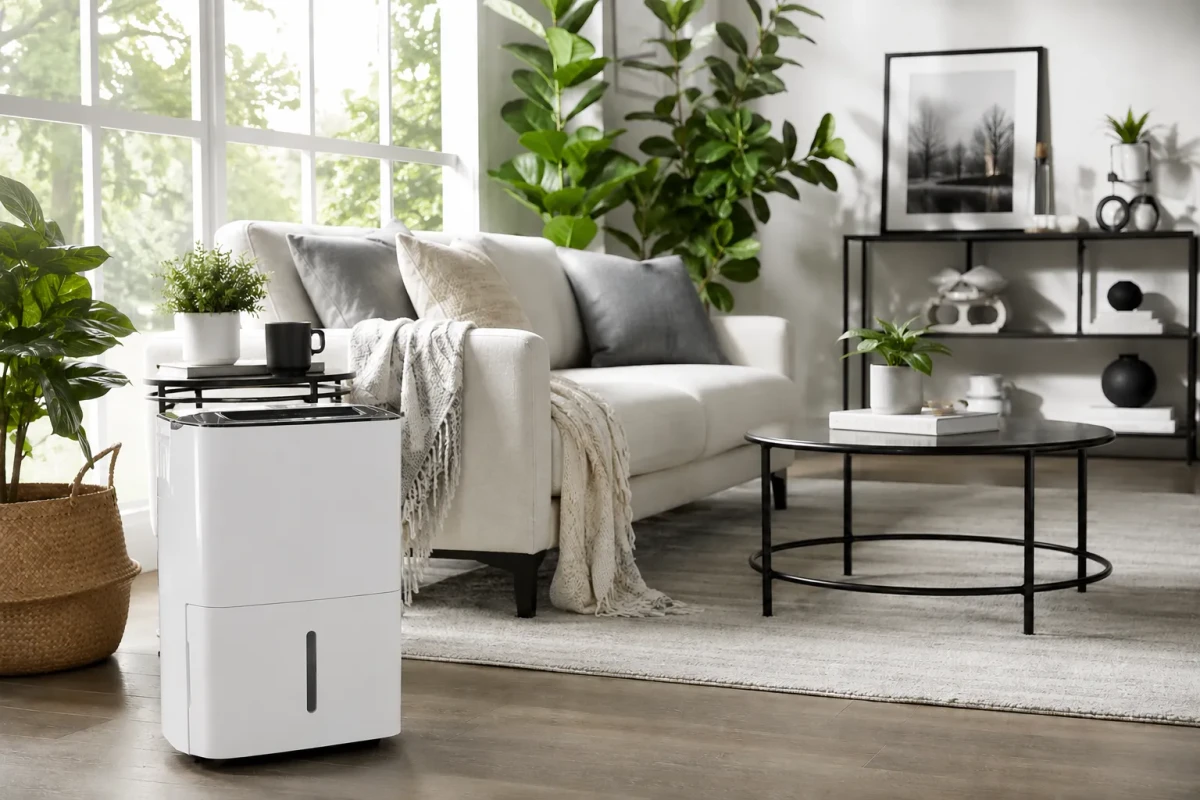
Featured Image: How to reduce humidity in home – dehumidifier in modern living room with plants
Table of Contents
This comprehensive guide on how to reduce humidity in your home provides evidence-based strategies and practical tips you can start using today.
Excess humidity can cause mold growth, damage furniture, and create an uncomfortable living environment. In the Home Scenes category, humidity control is essential for both comfort and health. This guide covers practical methods to reduce humidity in your home.
Understand Ideal Humidity Levels
The EPA recommends indoor humidity between 30-50%.
- Above 60% – Mold and dust mites thrive, musty odors develop
- Below 30% – Dry skin, irritated respiratory passages, static electricity
- 30-50% – The sweet spot for comfort and health
Use a hygrometer (available for under ) to monitor your home’s humidity levels in different rooms. Humidity varies by room – bathrooms and basements are typically the most humid.
Use Exhaust Fans Effectively
Exhaust fans remove moisture at the source before it spreads:
- Bathroom fans – Run during and for 20 minutes after showers
- Kitchen fans – Use while cooking, especially when boiling water
- Laundry room – Ensure the dryer vents to the outside, not into the room
Clean fan filters monthly for optimal performance. A clogged filter reduces airflow by up to 50%, making the fan much less effective.
Invest in a Dehumidifier
For persistent humidity problems, a dehumidifier is the most effective solution.
Sizing guide:
- 30-pint – Small rooms up to 500 sq ft
- 50-pint – Medium areas 500-1,000 sq ft
- 70-pint – Large or very damp spaces 1,000+ sq ft
Features to look for: auto-shutoff when the tank is full, continuous drain hose option, built-in hygrometer, and energy star rating. Empty the water tank regularly or connect a drain hose for hands-free operation.
Improve Ventilation Throughout Your Home
Good airflow is essential for humidity control:
- Open windows on dry days to allow fresh air circulation
- Use ceiling fans to keep air moving – moving air feels less humid
- Ensure HVAC ventilation is working properly
- Cross-ventilation – Open windows on opposite sides of the house for maximum airflow
- Leave interior doors open to allow air to circulate between rooms
In humid climates, open windows only when outdoor humidity is lower than indoor levels.
Fix Leaks and Water Intrusion
Even small leaks can significantly increase indoor humidity over time:
- Check for leaks around windows, pipes, and the foundation
- Inspect your roof, gutters, and downspouts to ensure water drains away from your home
- Look for water stains on ceilings and walls – these indicate hidden leaks
- Check the basement or crawl space for standing water or dampness
- Ensure your sump pump is working if you have one
Addressing water intrusion is the most important step – no amount of dehumidification will fix an active leak.
Reduce Moisture-Generating Activities
Small changes to daily habits can reduce indoor humidity by 10-15%:
- Cover pots while cooking to contain steam
- Take shorter showers with cooler water
- Avoid air-drying clothes indoors – use a dryer or outdoor line
- Dry clothes outside when weather permits
- Use a lid when boiling water
- Wipe down wet surfaces in bathrooms after use
If you must dry clothes inside, do so in a well-ventilated room with a dehumidifier running.
Frequently Asked Questions
What is the cheapest way to reduce humidity?
The cheapest methods are using exhaust fans, opening windows on dry days, covering pots while cooking, and taking shorter showers. A hygrometer helps you monitor levels. For persistent problems, a dehumidifier (-300) is the most cost-effective long-term solution.
Can houseplants affect indoor humidity?
Yes. Plants release moisture through transpiration, which can increase humidity. If humidity is already high, reduce the number of plants or choose low-transpiration varieties like succulents and cacti. Conversely, plants like peace lilies can help absorb excess moisture.
Why is my basement so humid?
Basements are naturally humid because they are below ground level, where moisture from the soil seeps through concrete walls and floors. Poor ventilation and lack of sunlight make it worse. A dehumidifier, proper grading outside, and a vapor barrier on the floor can significantly reduce basement humidity.
Explore More Categories
Discover more guides and tips across our content categories:
Final Thoughts
Controlling home humidity is essential for comfort, health, and protecting your home. Start with exhaust fans and ventilation, then invest in a dehumidifier if needed. Small changes to daily habits can make a significant difference.
Related Articles
Best Homemade Shower Mold Cleaner
Wall Mounted Garage Storage Systems