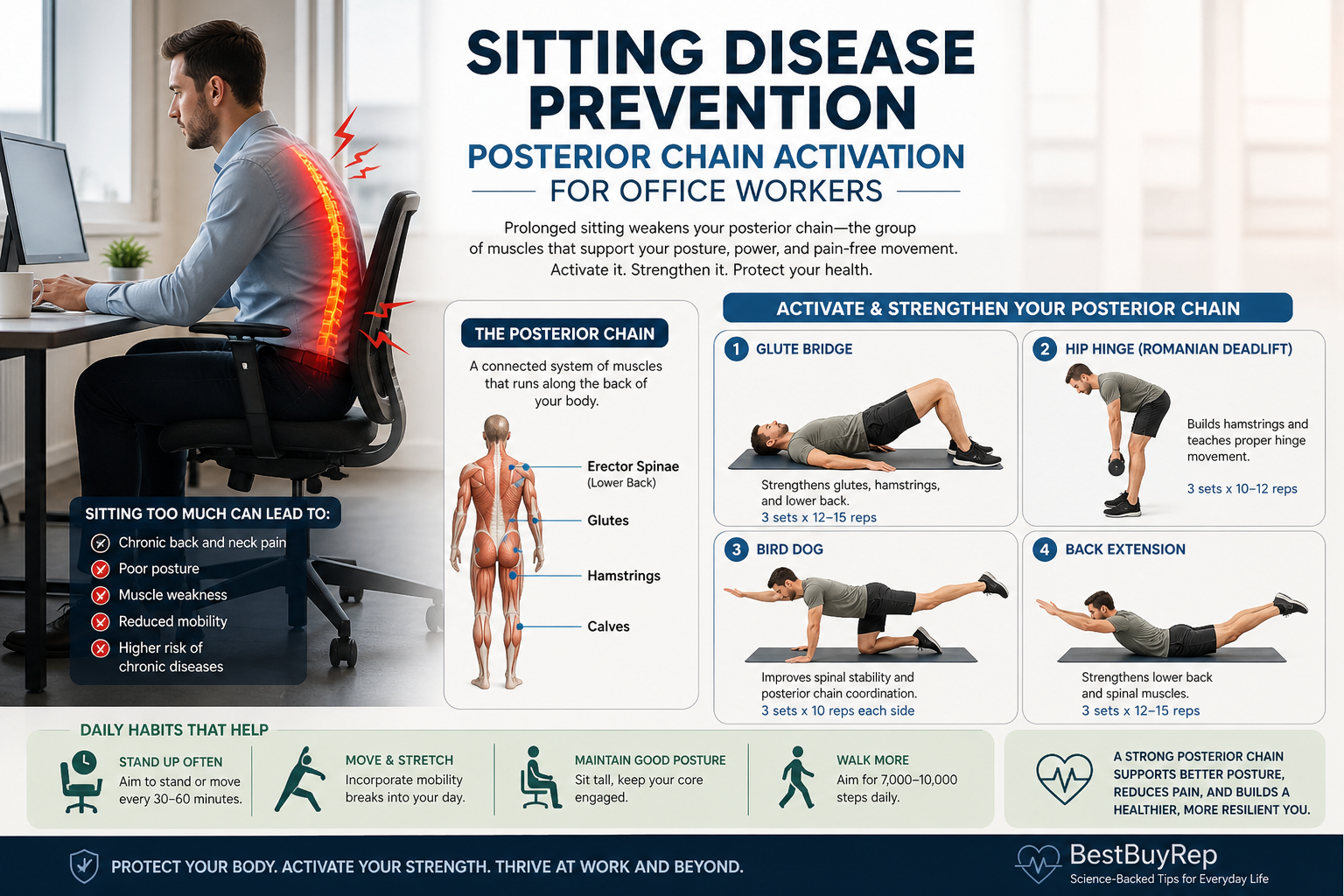
Feeling Stiff, Slouched, and Drained?
Sitting Disease Prevention Starts with Posterior Chain Activation.
Hours can slip by unnoticed when sitting at your desk. By the end of the day, shoulders are rounded, lower back is tight, legs feel heavy, and you may feel mentally foggy or unusually tired.
Long periods of sitting affect nearly every part of your body-from muscles and joints to circulation, energy, and focus. This is why experts now call excessive sitting a modern health risk.
Why Does This Happen?
Your body was designed for movement, not marathon sitting sessions. Prolonged sitting underuses the muscles along your posterior chain-glutes, hamstrings, and spinal muscles-which can weaken over time.
Meanwhile, hip flexors tighten, pulling your pelvis out of alignment, encouraging slouching, and stressing your lower back and neck.
Less movement slows blood flow, decreases calorie burning, and can even affect blood sugar regulation. This is why sitting too long leaves you physically stiff and mentally sluggish.
What If You Ignore It?
Occasional stiffness is normal. But habitual sitting can build up over time.
Long-term inactivity is linked to chronic back pain, poor posture, reduced mobility, and higher risk of metabolic issues like insulin resistance and cardiovascular disease.
Weak glutes and inactive posterior muscles make everyday movements-walking, climbing stairs, lifting, even standing-feel harder. Small aches may turn into persistent pain.
How Can You Improve It?
- Stand up every 30-60 minutes: Even brief walks or stretches restore circulation and wake up muscles.
- Activate your glutes daily: Glute bridges, bodyweight squats, and hip hinges help re-engage inactive muscles.
- Stretch your hip flexors: Gentle lunging stretches reduce tightness and improve pelvic alignment.
- Strengthen your upper back: Rows, band pull-aparts, and scapular squeezes counteract rounded-shoulder posture.
It Can Actually Get Easier
Small, consistent movements throughout the day make a remarkable difference. Your body responds quickly to movement, strength, and variety.
The goal isn’t perfect posture. It’s about sitting less, moving more, and keeping your body functioning well. With simple habits, you can feel stronger, energized, and comfortable at work.
BestBuyRep believes everyday health starts with everyday habits-because feeling better should fit into real life.
Creating a Calm, Well-Maintained Home
By noticing small signs and taking gentle preventive steps, you can keep your home flowing smoothly. Let your living space remain a haven for quiet mornings and cozy evenings.
Explore More Scenes
Related Articles
Understanding the Health Risks of Prolonged Sitting
Research from the American Heart Association shows that adults who sit for more than 8 hours per day have a significantly higher risk of cardiovascular disease, type 2 diabetes, and certain cancers. The term “sitting disease” refers to the metabolic and physiological changes that occur when we remain sedentary for extended periods.
When you sit for long periods, your body’s metabolism slows down, blood circulation decreases, and muscle activity drops to minimal levels. This can lead to insulin resistance, increased blood pressure, and elevated cholesterol levels over time.
Key Health Statistics
- Cardiovascular Risk: Sitting for 8+ hours daily increases heart disease risk by 147%
- Type 2 Diabetes: Prolonged sitting doubles the risk of developing diabetes
- Cancer Risk: Sedentary behavior is linked to 10-20% of breast and colon cancers
- Premature Death: Each additional hour of sitting increases mortality risk by 11%
Signs You’re Suffering from Sitting Disease
Recognizing the symptoms early can help you take action before serious health issues develop. Common signs include:
- Chronic lower back pain and stiffness
- Tight hip flexors and weak glutes
- Poor circulation in legs (swelling, varicose veins)
- Weight gain, especially around the abdomen
- Fatigue and low energy throughout the day
- Neck and shoulder tension from poor posture
- Difficulty concentrating or brain fog
Advanced Prevention Strategies for Office Workers
1. Implement the 20-8-2 Rule
Ergonomics experts recommend the 20-8-2 rule: for every 30 minutes, spend 20 minutes sitting, 8 minutes standing, and 2 minutes moving or stretching. This pattern helps maintain metabolic activity and reduces the negative effects of prolonged sitting.
2. Create a Movement-Rich Workspace
Design your office environment to encourage natural movement:
- Place your water glass across the room to force regular walking
- Use a printer located away from your desk
- Take phone calls while standing or walking
- Schedule walking meetings when possible
- Use stairs instead of elevators
3. Desk Exercises You Can Do Anytime
These simple exercises can be done at your desk without drawing attention:
- Seated Marching: Lift knees alternately for 30 seconds
- Desk Push-ups: Place hands on desk edge, lean forward, push back (10 reps)
- Shoulder Rolls: Roll shoulders forward and backward (10 reps each direction)
- Neck Stretches: Tilt head side to side, hold 15 seconds each
- Wrist Circles: Rotate wrists clockwise and counterclockwise
- Seated Twists: Rotate torso left and right, hold 10 seconds each
4. Optimize Your Ergonomic Setup
Proper ergonomics can reduce strain and make it easier to maintain good posture:
- Chair Height: Feet flat on floor, knees at 90-degree angle
- Monitor Position: Top of screen at eye level, 20-26 inches away
- Keyboard and Mouse: Elbows at 90 degrees, wrists straight
- Lumbar Support: Use a cushion or chair with proper back support
- Standing Desk: Alternate between sitting and standing every 30-60 minutes
Building a Sustainable Anti-Sitting Routine
The key to long-term success is building habits that stick. Start with small changes and gradually increase your activity levels:
Week 1-2: Awareness Phase
- Track your sitting time using a fitness tracker or app
- Set hourly reminders to stand and stretch
- Take a 5-minute walk after lunch
Week 3-4: Action Phase
- Implement the 20-8-2 rule consistently
- Add 2-3 desk exercises to your daily routine
- Walk or bike to work if possible
Week 5+: Habit Formation
- Standing desk usage becomes automatic
- Regular movement breaks feel natural
- Energy levels and focus improve noticeably
Technology Tools to Help You Stay Active
Leverage technology to build better habits:
- Fitness Trackers: Apple Watch, Fitbit, or Garmin with sit reminders
- Standing Desk Apps: Stand Up! The Work Break Timer, StandApp
- Posture Apps: PostureMinder, Upright Go
- Exercise Apps: 7 Minute Workout, Deskercise
Long-Term Health Benefits of Reducing Sitting Time
Research shows that even modest reductions in sitting time can yield significant health benefits:
- After 1 week: Improved energy levels and mood
- After 1 month: Better posture, reduced back pain
- After 3 months: Weight loss, improved cardiovascular fitness
- After 6 months: Lower blood pressure, improved insulin sensitivity
- After 1 year: Significantly reduced risk of chronic diseases
Remember, the goal isn’t to eliminate sitting entirely鈥攖hat’s impossible and unnecessary. The key is to break up long periods of sitting with regular movement. Even small changes can make a significant difference in your long-term health and well-being.